


Nurturing Your Little Fighter: A Guide to Post-NICU Care for Your Baby's Development and Wellbeing

Updated: 3 minutes ago

Welcoming your baby home after a stint in the neonatal intensive care unit (NICU) is a blend of joy and apprehension. As a parent of a premature or medically fragile infant, navigating post-NICU care might seem like yet another uncharted territory. In this guide to post-NICU care, we'll equip you with key things you need to know—from the importance of post-NICU care for you, your baby, and family to setting up a nurturing environment at home, and lastly, finding support and resources along the way.
Understanding Post-NICU Care and Its Significance: Continued Development
Post-NICU care marks the transition phase post-discharge, vital for your baby's continued development and wellness. It encompasses regular check-ins, vigilant monitoring, and unwavering support. You, as a parent, are the frontline advocate, entrusted with ensuring your baby's progress aligns with expectations. Regular consultations with healthcare providers, adherence to medical plans, and tracking of your baby’s health, feeding, and sleep patterns are essential. Don't hesitate to ask questions and seek clarification on any aspect of your baby's care.

Creating a Haven Post-NICU: How to prepare for bringing a baby home after a NICU stay
Crafting a haven conducive to your baby's growth is pivotal in post-NICU care. Tailoring the environment to suit your baby's unique needs allows a safe and nurturing space where they can thrive. For example, prioritize a serene sleeping area, invest in a reliable baby monitor for added peace of mind, and meticulously eliminate potential hazards. Unless your NICU providing team sends you home on an oxygen monitor, this equipment is not needed. The American Academy of Pediatrics has guidelines for if your baby goes home on oxygen: When Baby Needs Oxygen at Home. Consider reaching out to organizations like the March of Dimes or the National Association of Neonatal Nurses for guidance on creating a safe sleep environment for your baby.
Vigilance and Nurturing: Monitoring Your Baby's Health and Development

Attentive monitoring at home empowers you to detect subtle changes in your baby's well-being and address concerns promptly. Regularly assess for signs of discomfort or illness, track feeding habits, and collaborate closely with healthcare professionals to monitor growth milestones. Your vigilance ensures early intervention, safeguarding your baby's health trajectory. Utilize resources such as online trackers or mobile apps designed specifically for monitoring preterm or medically fragile infants' health and development. One example is Pathways Baby Development Tracker for Premature Newborns.
Development also dictates feeding, sleep and comfort. Your baby's needs differ from those of full-term infants. Embrace the journey of understanding your baby's unique cues and preferences. Organizations like La Leche League International offer breastfeeding support and resources, including local support groups and online forums where you can connect with other parents facing similar challenges. Here at NayaCare, we have developed a breastfeeding toolkit for the NICU graduate and encourage you to join our NICU specific facebook group, Small Steps, BIG gains for online feeding support specifically for NICU graduates.
Download the free guide created by by Dr. Sonal Patel, MD, CLE, Patti James, NNP, IBCLC, and Courtney Massina, RN, IBCLC.
Questions? e: sonalpatel@nayacare.org | p: (720) 815-5922
Enriching Development: Stimulating Your Baby's Senses and Learning
Engaging your baby in sensory-rich experiences fosters holistic development. Sing, read, and interact with your baby, creating a vibrant sensory environment. Introduce varied textures, colors, and sounds to stimulate cognitive growth and nurture a lifelong love for exploration and learning. Explore resources such as developmental playbooks or sensory stimulation kits designed to promote your baby's sensory and cognitive development.
Self-Care Amidst the Post-NICU Journey: Coping with Stress and Anxiety
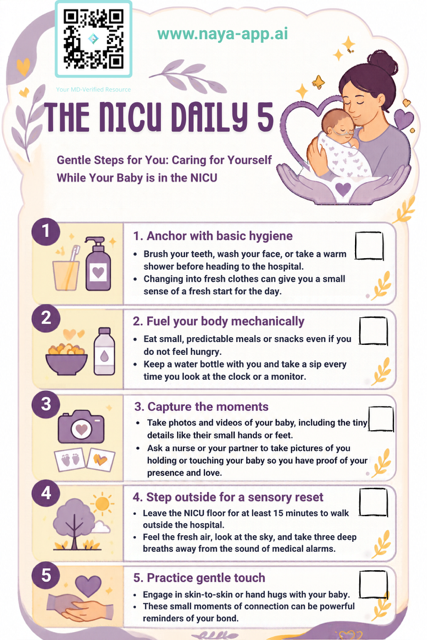
Navigating the post-NICU journey may evoke stress and anxiety; acknowledge these emotions as part of the process. Prioritize self-care, lean on your support network, and seek solace in shared experiences. Sometimes in reality, words are easy to write and hard to execute. However, we all need grace and encouragement to prioritize rest, add physical activity when able, and to be reminded that your well-being is essential for your baby's welfare. Consider joining support groups specifically tailored to parents of NICU graduates, where you can find camaraderie, understanding, and coping strategies such as PremieWorld.
Seeking Support: Additional Resources for Post-NICU Care

Harnessing available resources and support networks is instrumental in navigating the post-NICU terrain. Your healthcare provider serves as a beacon of guidance, offering valuable insights and connecting you with relevant support groups and organizations. Embrace the community of parents who understand your journey intimately, providing solace and solidarity along the way. Explore online resources such as NICU parent blogs, social media groups, and virtual support networks where you can connect with other parents and access valuable information and support. Additionally, consider reaching out to local hospitals or healthcare organizations for post-NICU care programs and services tailored to your baby's needs.

Here are some support group links for parents of NICU babies:
Faith's Footsies: Receive support/funding or donate to helping a family whose baby was in the Neonatal Intensive Care Unit. You can also purchase clothing that is specifically designed for premature babies.
Preemie Parent Alliance: A network of support organizations for families of premature infants.
Hand to Hold: Provides comprehensive support programs for NICU parents, including peer-to-peer mentoring, online support groups, and resources for coping with NICU-related stress and anxiety.
NICU Helping Hands: Provides support and resources for NICU families, including NICU Family Support Specialists who offer guidance and assistance during the NICU journey.

A NICU transition visit in which we spend 60-90 minutes in your home helping answering any medical questions, conducting a newborn exam, checking any equipment, and addressing any other concerns. The appointments are conducted by Adrienne Isaacs, MSN, NNP-BC, our neonatal nurse practitioner or myself. Appointments are covered by Medicaid.
Free “mommy check in” call with our counselors helping mom to tell their story, struggles, and concerns around the NICU.
Quick FAQs
What is a NICU and what babies typically go there?
A NICU stands for Neonatal Intensive Care Unit. It is a specialized hospital ward designed to provide round-the-clock, intensive medical care for newborn infants who are born prematurely, have low birth weight, or suffer from serious medical conditions that require specialized monitoring and treatment. The unit is staffed by neonatologists, specialized neonatal nurses, respiratory therapists, and other multidisciplinary pediatric experts, and it is equipped with advanced technology like incubators, ventilators, and specialized monitors.
While most healthy newborns go straight to the nursery or room-in with their parents, roughly 10 to 15 percent of newborns require admission to the NICU. Babies are typically admitted for one or more of the following reasons:
Prematurity: Babies born before 37 weeks of pregnancy—especially those born very early (micro-preemies born before 28 to 32 weeks)—frequently need the NICU because their organs, lungs, and brains are not yet fully developed.
Low Birth Weight: Infants weighing less than 5.5 pounds (2,500 grams), or those who are unusually small for their gestational age (intrauterine growth restriction), may need extra help regulating their body temperature, feeding, and gaining weight.
Respiratory Distress: Conditions like Respiratory Distress Syndrome (RDS), transient tachypnea of the newborn (fast breathing), or meconium aspiration syndrome occur when babies struggle to breathe on their own and require oxygen support or mechanical ventilation.
Birth Defects and Congenital Anomalies: Structural conditions present at birth—such as congenital heart defects, spina bifida, gastrointestinal malformations, or chromosomal disorders—often require immediate surgical intervention or specialized stabilization in the NICU.
Birth Complications or Birth Trauma: Difficult deliveries involving oxygen deprivation (hypoxic-ischemic encephalopathy), shoulder dystocia, or severe infections (such as sepsis, pneumonia, or meningitis contracted before or during birth) require intensive medical management.
Multiples: Twins, triplets, or higher-order multiples are statistically more likely to be born prematurely or with low birth weights, leading to higher rates of NICU admission.
What financial aid is available for families with NICU expenses?
Navigating a Neonatal Intensive Care Unit (NICU) stay brings immense emotional stress, often compounded by heavy financial burdens ranging from massive hospital bills to daily travel, parking, and lodging costs. This article from Luxie Charm will walk you through NICU Financial Assistance.
What are the benefits of kangaroo care in the NICU?
Kangaroo care—also known as skin-to-skin contact—involves placing a diaper-clad infant upright against a parent's bare chest. In the Neonatal Intensive Care Unit (NICU), this simple practice provides profound physiological and psychological benefits for both the baby and the parents.
Benefits for the Baby
Thermal Regulation: A parent's body naturally adjusts to warm or cool the baby, helping premature infants maintain a stable body temperature more effectively than an incubator alone.
Cardiorespiratory Stability: Skin-to-skin contact helps regulate the infant's heart rate, breathing patterns, and blood oxygen saturation, leading to fewer apneic episodes.
Brain Development and Sleep: Infants who receive kangaroo care experience deeper, more organized sleep cycles, which are crucial for neurological development and growth.
Pain Management: Being held skin-to-skin releases natural endorphins, which reduce physiological stress responses and lower pain scores during routine NICU procedures like heel sticks.
Faster Weight Gain: Because babies expend less energy trying to stay warm and managing stress, more of their caloric intake goes toward physical growth and development.
Benefits for the Parents
Enhanced Bonding: Physical closeness stimulates the release of oxytocin, the "bonding hormone," which deepens emotional attachment and reduces postpartum anxiety and depression.
Boosted Milk Supply: Skin-to-skin contact directly stimulates prolactin production, helping mothers initiate and sustain a stronger milk supply for breastfeeding or pumping.
Empowerment and Confidence: In an environment where medical machinery can make parents feel sidelined, kangaroo care gives them a unique, active, and irreplaceable role in their baby's healing.
What types of car seats are safest for premature infants?
This article from The Car Mom is great and has several product recommendations, but the safest answer is to always double-check the information we provide with your pediatrician or doctor.
If your baby was born prematurely (typically before 37 weeks gestation) or with a very low birth weight, the American Academy of Pediatrics (AAP) recommends a Car Seat Tolerance Screening (CSTS), commonly called a car seat test, before leaving the hospital. How it works: Your baby is placed in their actual car seat (adjusted to the correct recline angle, usually 45 degrees) and connected to a hospital monitor for 90 minutes (or the duration of your drive home). What it measures: Nurses monitor the baby's heart rate, breathing, and blood oxygen levels to ensure they do not experience apnea, bradycardia, or oxygen desaturation caused by positional slouching.
How to ensure a safe sleep environment for a former NICU baby?
The American Academy of Pediatrics (AAP) and pediatric specialists emphasize the following core practices for creating a safe sleep space.
1. The Core Safe Sleep Rules (The ABCs)
Alone: The baby should always sleep by themselves in their own space. Never allow bed-sharing, as it significantly increases the risk of suffocation and Sudden Infant Death Syndrome (SIDS)
Back: Always place your baby to sleep on their back for every sleep—naps and nighttime. Even if your baby was positioned differently in the NICU for medical reasons, back sleeping is the gold standard once they are discharged home
Crib or Bassinet: Use a safety-approved crib, bassinet, or play yard with a firm, flat mattress and a tight-fitting sheet. Never use inclined sleepers, positional wedges, soft couches, or adult beds
2. Managing Medical Equipment and Monitors
Many NICU graduates are discharged with specialized equipment, such as home apnea monitors, pulse oximeters, or supplemental oxygen.
Cord Safety: All monitor wires, tubing, and power cords must be kept completely out of the crib and away from the baby's reach to prevent strangulation or entanglement
Secure Placement: Ensure monitoring units are placed on a stable surface where they cannot be pulled down by pets, older siblings, or trailing cords
Follow Discharge Orders: Always adhere strictly to the customized safe sleep and monitoring protocol provided by your baby’s neonatologist or discharge coordinator before leaving the hospital
3. Special Considerations for Preemies
Swaddling and Rolling: Swaddling is a great soothing tool in the NICU and early home days, but you must stop swaddling the moment your baby shows any signs of trying to roll over, regardless of their corrected age. Because preemies may have varied muscle tone development, keep a close eye out for early rolling attempts
Reflux and Elevation: It is common for NICU babies to experience infant reflux. However, never elevate the head of the crib or use commercial wedge inserts unless explicitly prescribed by your pediatrician. Elevated surfaces can cause the baby to slide down into a position that compromises their airway
Temperature Regulation: Premature infants can struggle to regulate their body temperature. Dress them in breathable layers (such as a wearable blanket or sleep sack) rather than heavy blankets, and keep the room at a comfortable, moderate temperature (typically between 68°F and 72°F). Avoid overheating, which is a known risk factor for SIDS
Where can I find specialized formula for premature babies?
Specialized post-discharge formulas for premature babies (such as Similac NeoSure and Enfamil EnfaCare) are widely accessible through several standard and medical channels.
If you are looking for bulk quantities, case supplies, or specialized liquid ready-to-feed formats, check out Medical Supply Sites; Websites like LL Medico or Simply Medical specialize in shipping medical-grade and specialty nutrition directly to households.
Manufacturer Direct: Ordering through Abbott (Similac) or Mead Johnson (Enfamil) customer portals or partner services can sometimes guarantee stock availability.
If your baby requires a hyper-caloric or specialized medical formula due to specific underlying conditions, your doctor’s office can sometimes provide starter samples, connect you with local medical distributors, or write a prescription.
WIC Programs: If you participate in the Special Supplemental Nutrition Program for Women, Infants, and Children (WIC), specialized formulas prescribed for medical reasons are often covered or provided through state-approved pharmacies and vendors.
How to get help with insurance claims for NICU stays?
1. Start Inside the Hospital: NICU Social Workers & Financial Counselors
Your absolute first line of defense is right inside the hospital
NICU Social Workers and Case Managers: They deal with insurance complexities and denials every single day. They can connect you with internal hospital advocates, review coverage options, and help you apply for secondary coverage.
Hospital Financial Assistance / Charity Care: If your insurance leaves you with high out-of-pocket costs, ask to speak with a financial counselor about the hospital’s financial assistance policy (FAP) or charity care programs.
Many major hospital systems wipe out or heavily discount balances for families meeting certain income thresholds.
Confirm Baby’s Enrollment: Double-check that your baby has been officially added to your health insurance policy. Most employer plans require newborns to be added within 30 to 60 days of birth, and missing this window is a frequent cause of automatic claim rejections.
2. Dissect the Explanation of Benefits (EOB) and Denials
When an insurance company denies a claim or refuses to pay a portion, they are legally required to state why on your Explanation of Benefits (EOB) or via a formal denial letter. Look closely at the denial code.
"Not Medically Necessary": Insurers sometimes argue that a specific day count, specialized test, or level of monitoring wasn’t required. This can be fought with the help of your neonatologist.
"Out-of-Network": If the hospital was in-network, but certain specialists (like neonatologists, anesthesiologists, or transport teams) billed separately as out-of-network, look into federal and state No Surprises Act protections, which shield patients from unexpected balance billing in emergency and specialized situations.
Coding or Administrative Errors: Simple clerical mistakes (like a mistyped date, incorrect birth weight code, or mismatched procedure code) account for a massive percentage of rejections.
3. File an Internal and External Appeal
Insurance denials are not final. A large percentage of denied medical claims that are formally appealed end up overturned.
Gather a Letter of Medical Necessity: Ask your baby’s attending neonatologist or pediatrician to write a formal letter explaining why the specific care, length of stay, or specialized treatment was strictly required for your child's survival and health.
Submit a First-Level Internal Appeal: Follow the instructions on your denial letter precisely. Pay close attention to deadlines (often 180 days from the notice).
Request an External Review: If the insurance company denies your internal appeal, you generally have a legal right to an Independent External Review, where an objective third-party medical expert evaluates the case.
4. Leverage Specialized Advocacy Organizations
If fighting the insurance company on your own becomes too draining, you can enlist professional help.
Medical Bill Advocates / Claim Support Services: Organizations like Solace Health, FixMyClaim, or independent patient advocates (searchable through directories like Greater National Advocates at gnanow.org) specialize in untangling billing red tape, reviewing policies, correcting errors, and managing appeals on your behalf.
State Insurance Commissioner: If an insurer is acting unfairly, delaying responses, or violating state insurance mandates, you can file a formal complaint with your State’s Department of Insurance or Consumer Assistance Program (CAP). Insurance companies take state regulatory inquiries very seriously.
Where to donate preemie clothes or baby items to NICU families?

Many major hospital NICUs and charitable foundations associated with them accept preemie clothing, handmade items, and baby gear, though policies vary significantly by facility. If a local hospital cannot accept direct drop-offs due to policy, several established organizations specialize in gathering and distributing preemie items to NICU families:
Project Sweet Pea: A nationwide organization founded by NICU parents that supports families with preemies and sick infants by providing care packages, clothing, and peer support.
Graham's Foundation: Focuses specifically on supporting parents of premature babies, offering care packs and resources that often include specialized clothing items.
Local Clothing Closets & Pregnancy Resource Centers: Many community-based charities maintain closets specifically stocked for low-income mothers or families experiencing unexpected early deliveries.

Buy clothing designed specifically for a preemie baby in the NICU from Faith's Footsies.
Their provisionally patented design has many advantages over traditional clothing.
Important Guidelines Before You Donate:
Condition Matters: For clothing and blankets, items must be either brand-new with tags or washed in fragrance-free, hypoallergenic detergent, and stored in a smoke-free, pet-free environment.
Call First: Never drop off unannounced at a hospital. Infection control protocols mean many units require items to be quarantined, packaged in specific ways, or pre-approved by a nurse manager.
Gear Restrictions: If you are looking to donate larger baby items (like car seats, strollers, or swings), keep in mind that most hospitals cannot accept used car seats due to liability and expiration dates. However, local family shelters or community organizations are often deeply grateful for them.
How to find a pediatrician experienced with NICU graduates?
Dr. Sonal Patel is a MD & CLE with over 20 years of experience. Pediatrician, Neonatologist, Breastfeeding Specialist, and Mother to four boys. Finding a pediatrician for a Neonatal Intensive Care Unit (NICU) graduate involves more than choosing a standard newborn doctor. Because NICU graduates often have unique medical histories, specialized feeding regimens, developmental tracking requirements based on corrected age, and coordination needs across multiple specialists, you want a pediatrician who feels confident managing medical complexity.
A NICU transition visit in which we spend 60-90 minutes in your home helping answering any medical questions, conducting a newborn exam, checking any equipment, and addressing any other concerns. The appointments are conducted by Adrienne Isaacs, MSN, NNP-BC, our neonatal nurse practitioner or myself. Appointments are covered by Medicaid.
Free “mommy check in” call with our counselors helping mom to tell their story, struggles, and concerns around the NICU.
Key Questions to Ask During an Interview:
Once you have a few candidate practices, schedule an interview (many offer virtual or in-person "meet and greet" sessions). Ask targeted questions tailored to a NICU graduate:
"What is your experience managing NICU graduates or premature infants with complex medical histories?"
"How do you typically handle communication and shared care plans with pediatric subspecialists?"
"Are you comfortable managing specialized feeding plans, calorie fortification, or growth tracking by corrected age?"
"What is your policy for handling urgent or after-hours concerns, and how do you prioritize high-risk infants calling in with symptoms?"
Check Insurance and Logistics
Given the frequency of early post-discharge check-ups, practical logistics matter tremendously.
Insurance Network: Verify that both the pediatrician and their medical group are fully in-network, and check coverage policies for any specialized equipment or developmental therapies your baby might need.
Location and Availability: Expect more frequent check-ups in the first year.

Our free Small Steps, BIG Gains Breastfeeding Toolkit was created by Dr. Sonal Patel, MD, CLE, Patti James, NNP, IBCLC, and Courtney Massina, RN, IBCLC, to provide practical milestones and tracking charts for your family.
This post is for informational purposes only and does not constitute medical advice. Please consult your healthcare provider for guidance specific to your situation.
Keywords: premature (preterm) baby, neonatal intensive care unit, nicu meaning, intensive neonatal care unit, nicu baby, what is a neonatal intensive care unit, what is nicu, how much do nicu nurses make, neonatal intensive care unit nurse, how to become a nicu nurse, what does nicu stand for, infants in nicu, baby, hospital, nursing, what is neonatal icu, newborn, nurse practitioners, birth defects, newborn care, newborn babies, high risk, premature babies, nicu hospital, preterm births, nicu team, gestational age, care for babies, born early, birth weight, american academy of pediatrics, 35 weeks, neonatal intensive care unit jobs, baby condition, post-NICU care, bringing baby home from NICU, caring for preemie at home, NICU graduate care, preparing home after NICU, monitoring baby after NICU, managing feeding/sleeping/crying, stimulating learning after NICU, coping with stress as NICU parent, finding post-NICU resources, supporting development after NICU, neonatalintensivecareawareness, neonatalintensivecareawarenesmonth, Fourth Trimester Care, New Mothers, Dr. Sonal Patel, Motherhood Resources, Pregnancy, postpartum period
Backlinks:
https://hub.hopeforhenry.org/in-hospital/nicu-101/
hopeforhenry.org
https://www.nebraskamed.com/pregnancy-childbirth/nicu/help-with-care
nebraskamed.com
https://www.puribunda.com/en/several-reasons-why-babies-need-to-be-treated-in-the-nicu/
https://www.childrensmn.org/myjourney/neonatal/educationmaterials/article/15278/nicu-follow-up-program-5-months/
https://www.draeger.com/en-us_us/Hospital/Insights/Improving-Clinical-Outcomes/5-Key-Success-Factors-for-a-Small-Baby-NICU
https://medschool.cuanschutz.edu/psychiatry/PatientCare/colorado-center-for-women's-behavioral-health-wellness/clinical-services/connections-program/resources-for-providers
https://pubmed.ncbi.nlm.nih.gov/24816879/
https://www.cincinnatichildrens.org/service/n/neuro-nicu/research
https://stories.nd.edu/podcast/a-better-start-for-nicu-families-notre-dame-leads-the-way-in-neonatal-intensive-care/
https://www.medicalcityhealthcare.com/about-us/patient-stories/kylie-and-timothy-allison
https://www.nature.com/articles/jp201322
https://carle.org/newsroom/staying-healthy/2019/07/nicu-grads-say-going-back-as-important-as-breaking
https://news.vanderbilt.edu/tag/nicu/
https://www.umms.org/childrens/health-services/neonatology/nicu-follow-up-program/um-jiji-nicu-advisory-council
https://pubmed.ncbi.nlm.nih.gov/32268342/
https://www.yashodahospital.org/blog/nicu-care-for-premature-babies-when-does-your-baby-need-specialized-support
https://www.bronsonhealth.com/bronsonpositivity/share-your-positivity/amazing-nicu-nurses/
https://healthcare.utah.edu/news/tags/nicu
https://medschool.cuanschutz.edu/psychiatry/PatientCare/colorado-center-for-women's-behavioral-health-wellness/clinical-services/connections-program/resources-for-families/nicu-parent-resource-guide
https://www.cbsnews.com/chicago/news/suburban-chicago-nicu-baby-heads-home/
https://iuhealth.org/thrive/nicu-nurse-cares-for-the-smallest-of-patients-isr


Comments