


Why Postpartum Care Should Be Home-Based, Not Office-Based

“Didn’t you just give birth?”
A simple acknowledgement from my contractor forced me to face a reality that I had conducted like clockwork. Get pregnant, give birth, return 2 days after said birth and follow a postpartum medical system built upon a paternalist view and reinforced by policies and insurances. A system that demands achievement (exclusive breastfeeding, bounce back, and no postpartum depression) without any scaffold to help.
Traditional postpartum care has largely been built around office visits scheduled weeks after birth. However, this model does not reflect the reality of recovery. The truth is, postpartum recovery doesn’t follow a calendar. There’s pain, sometimes sharp, sometimes constant. There’s exhaustion like your body never fully clocks out. Sleep is broken into fragments that barely count as rest. And then there’s the baby: feeding, soothing, diaper changes, figuring out rhythms, monitoring needs that don’t pause just because you have an appointment.
So the question becomes: if the hardest part of postpartum care happens at home, why does support often show up somewhere else?
It’s not that parents don’t need care. It’s that the traditional model often expects recovery to behave like an administrative task: show up, get checked, move on. That’s where home-based postpartum care changes the story.
Home-based postpartum care: care where life actually happens.
Home-based postpartum care flips the assumption.
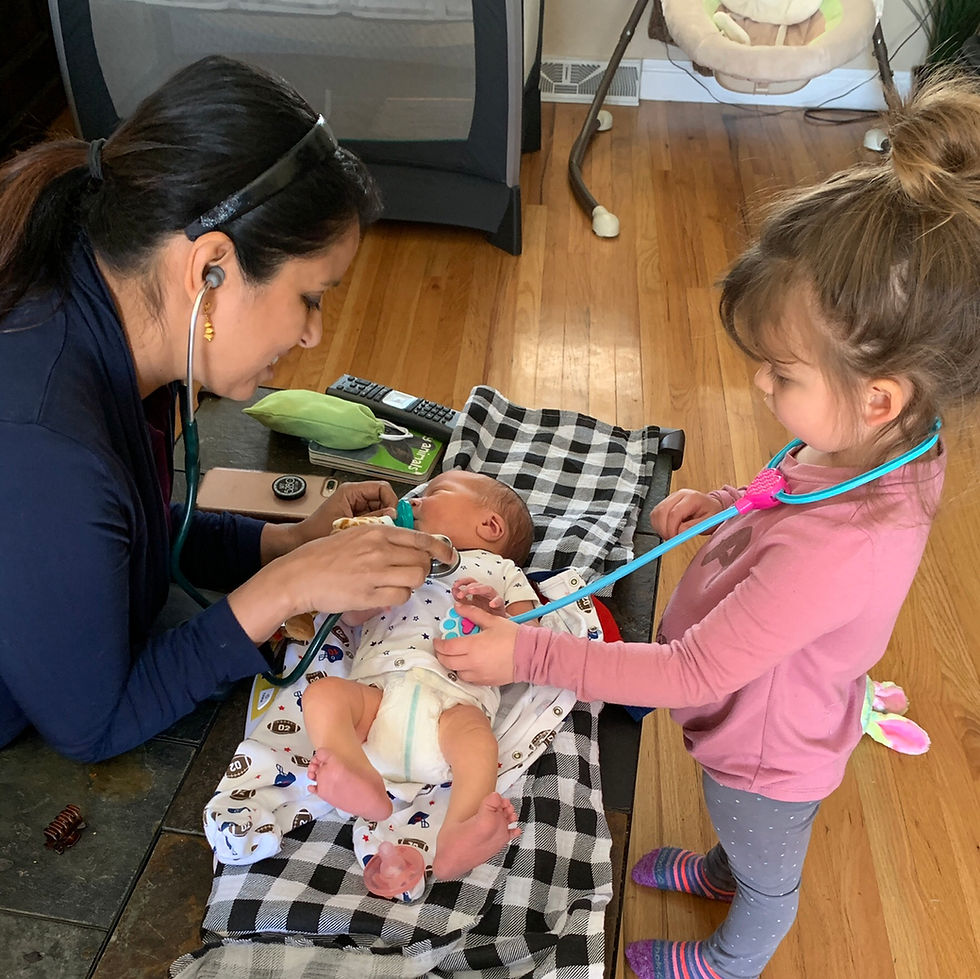
Instead of asking a recovering parent to come to the clinic, clinicians come to the home. Not just to “see how things are going,” but to observe what recovery looks like in real time: where feeding happens, where sleep is set up, where healing is either progressing or struggling, and where stress shows up in body language, mood, and daily routines.
In a home setting, support can be practical and specific. Postpartum recovery is not only physical. It’s emotional. It’s social. It’s logistical. And in the home, clinicians can see the full picture, not just the version that fits into a short appointment.
Sometimes issues don’t fully reveal themselves during brief office visits. A clinic appointment can be like taking a snapshot.
A home visit is more like watching a short video, real behavior, real routines, real barriers, real context. The earlier those issues are recognized, the earlier support can start, and earlier support often means fewer complications later.
The evidence backs up what families already feel
A lot of people don’t need a research paper to know that postpartum support should be timely and accessible. But evidence helps us be confident that home-based models aren’t just a “nice idea”; they can be effective.
Home-based postpartum care has been reviewed as beneficial in research syntheses, including systematic review work on health outcomes.
Home visiting approaches have been studied for maternal mental health, including postpartum depression screening and referral processes.
Randomized trials of postnatal nurse home visiting have evaluated downstream outcomes, such as healthcare utilization.
That’s the shift: from “we’ll see you later” to “we’re with you while this is happening.” In other words: home-based postpartum care isn’t only about comfort. It’s about clinical impact.
The shift: from reactive care to real prevention
Traditional postpartum care often functions like this:
Wait for the follow-up visit.
Address what’s visible by then.
React when problems become clear enough to trigger urgent attention.
Home-based postpartum care tends to work differently:
Monitor in the environment where recovery is happening.
Identify risk early.
Provide hands-on guidance and support.
Connect families to help before small problems become bigger ones.
A final thought: postpartum care should match postpartum reality
If postpartum support is built around clinic appointments, it can accidentally treat recovery like something that follows predictable timing. But postpartum recovery is unpredictable by nature. It’s intense. It’s personal. It’s hard.
Home-based postpartum care simply meets families where postpartum is actually taking place,at home, in the thick of it, when support matters most. This model is not just more convenient, it is often more effective. Home-based postpartum care can reduce emergency visits, improve maternal mental health outcomes, and strengthen newborn health monitoring. It represents a shift from reactive care to proactive support during the most vulnerable stage of recovery.
Sources
Tiruneh GT, et al. (2019). Systematic review/meta-analysis on home-based postpartum care effectiveness.
Cochrane/IPC-style evidence evaluation on home visiting for postpartum depression.
Dodge KA, et al. (2013). RCT of universal postnatal nurse home visiting with downstream outcomes.


Comments