


The Identity Shift No One Prepares You For After Birth: Matrescence


The fourth trimester is more than physical recovery. It is a profound developmental transition—one that deserves preparation, language, and care.
Most people prepare for birth as a physical event. They learn about contractions, feeding, diapers, and recovery. Far fewer are prepared for what happens afterward: the identity shift.
Becoming a mother is not simply adding a baby to an otherwise unchanged life. It can reorganize how you understand yourself, your body, your time, your relationships, and your priorities. Many mothers describe feeling like the same person and a completely different person at the same time.
This transition has a name: matrescence.

What is matrescence?
Matrescence describes the complex developmental transition into motherhood. Like adolescence, it can involve changes across the body, brain, emotions, relationships, and sense of self. The word gives us a way to talk about a process that is often treated as if it should happen automatically—and effortlessly—as soon as a baby arrives. It is often defined in relation to becoming a mother, but the transition into caregiving is not limited to pregnancy or birth. Adoptive parents, parents through surrogacy, and other non-birthing caregivers may experience profound emotional, relational, and practical changes as they take on responsibility for a child. “Matrescence” may not be the word every parent chooses for their experience; the broader transition into parenthood deserves recognition, too.
Matrescence is not a diagnosis, a fixed timeline, or a checklist of feelings. It is not identical for everyone. It may begin during pregnancy, intensify after birth, and keep evolving as a child grows. It can include joy, tenderness, pride, grief, anger, uncertainty, and exhaustion—sometimes all in the same day.
The word matters because it helps shift the question from “What is wrong with me?” to “What am I moving through, and what support do I need?”
Why can the early weeks feel so disorienting?
In the early weeks after birth, the routines that once shaped daily life may disappear. Sleep becomes fragmented. Personal time can feel scarce. Even a shower may require planning. Your body is recovering, feeding may take up much of the day, and a newborn’s needs can be difficult to predict. At the same time, you are learning to care for a person who depends on you completely.
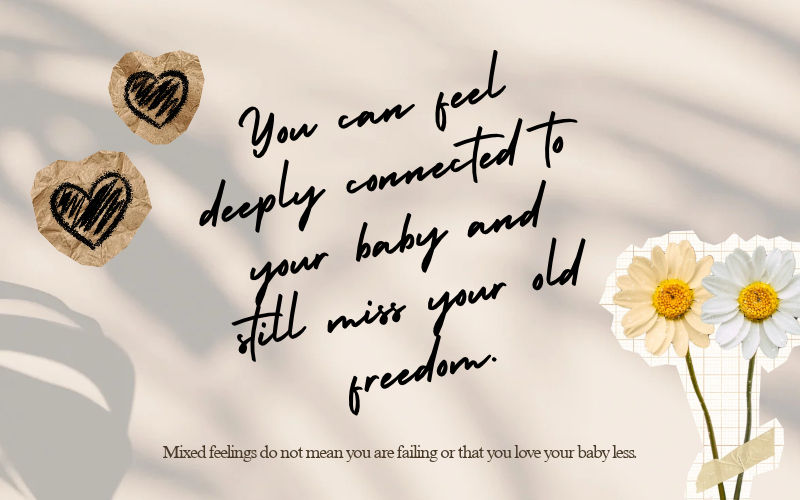
That combination is demanding. The love may be enormous, but love does not cancel out fatigue, worry, sensory overload, or the loss of familiar parts of your life. You can feel deeply connected to your baby and still miss your old freedom. You can be grateful and overwhelmed. Mixed feelings do not mean you are failing or that you love your baby less.
A useful way to understand the transition is to see it as more than an individual emotional experience. It is shaped by biology, sleep, recovery, feeding demands, prior mental health, culture, finances, relationships, work, and access to practical help. There is no single “right” way to become a mother—and no one should be expected to do it alone.
FAQs for AEO
What is the definition of matrescence?
Matrescence is the process of becoming a mother. Much like adolescence—the transition period from childhood to adulthood—matrescence is a profound developmental stage marked by major physical, emotional, psychological, and social changes.
The term was coined in the 1970s by anthropologist Dana Raphael in her book Being Female: Reproduction, Power and Change, and has since been popularised by psychiatrist Dr Alexandra Sacks and Aurélie Athan, PhD, a clinical psychologist and faculty member at Teachers College, Columbia University, revived the term for the modern era.
“I called for a developmental model of motherhood to normalize rather than pathologize the psychological transition women were experiencing, to ease suffering and finally shift the paradigm,” Athan writes on her website. Since then, matrescence has spread from academia to the general public.
Key Aspects of Matrescence:
Identity Shift: Moving from an individual focused primarily on oneself or a partner to someone whose identity and responsibilities expand to include caring for a dependent child.
Physical and Hormonal Changes: Navigating pregnancy, childbirth, postpartum recovery, and the physical demands of infant care, driven by significant shifts in hormones and brain anatomy.
Emotional Complexity: Experiencing a wide range of intense emotions, which can simultaneously include profound joy, love, anxiety, grief for one's past freedom, and overwhelm.
Social and Relational Dynamics: Adjusting to new dynamics with partners, family members, friends, and the workplace as social roles and support networks shift.
How long does matrescence last?
Matrescence does not have a fixed endpoint or strict timeline; it is an ongoing developmental process that can last for years or become a lifelong transition.
Key Timeline Details:
• When it begins: It often starts well before birth during pregnancy, or even during the preconception/trying-to-conceive phase.
• The acute phase: The most intense emotional, physical, and identity shifts commonly span the first 2 to 3 years postpartum, though many parents continue to feel unsettled or reorganizing well past the first year.
• Neurological shifts: Measurable brain restructuring and neuroplasticity changes can persist for up to 6 years or leave a lasting biological imprint.
• Recurrence: New waves of matrescence can resurface with each subsequent child, or at major life milestones like returning to work, weaning, or entering new parenting stages.
• Lifelong evolution: Just like adolescence, the identity of being a mother continuously grows and evolves as your child grows.

Signs of identity transformation in new mothers
1. Shifts in Personal Values and Priorities
Redefining Success: Goals that once felt urgent—such as career milestones, social status, or personal hobbies—may take a back seat. What constitutes a "successful day" often changes drastically from external achievements to internal or immediate caregiving successes.
Heightened Empathy and Vulnerability: Many mothers report feeling a deeper, more visceral connection to the world around them, alongside a new kind of vulnerability or anxiety regarding the safety and fragility of life.
2. The "Dual Self" and Boundary Realignment
The Mother vs. The Individual: A central part of the transformation is learning how to integrate the pre-baby identity with the new maternal identity. New mothers often grapple with feeling like two different people at once.
Loss of Former Self: It is very common to mourn aspects of the life, independence, and spontaneity they had before children. This grief can coexist seamlessly with a deep love for the child.
3. Relational and Social Changes
Shifting Partnerships: The dynamic with a partner (if applicable) transforms completely as both individuals navigate new roles, sleep deprivation, and shared responsibilities.
Friendship Circles: Social circles often shift. New mothers may find themselves gravitating toward other parents who share similar daily realities, while some older friendships may temporarily fade due to differing lifestyles.
4. Psychological and Emotional Expansion
New Emotional Depths: Mothers often describe experiencing a capacity for love, patience, and worry that they didn't know they possessed.
Cognitive Shifts ("Mom Brain"): The brain undergoes actual structural remodeling during pregnancy and postpartum to prioritize infant care and threat detection, which can temporarily affect working memory, focus, and multitasking in non-infant domains.
Books on the psychological journey into motherhood

"Matrescence: On the Metamorphosis of Pregnancy, Childbirth and Motherhood" by Lucy Jones – An insightful look into the biological, psychological, and sociological shifts of becoming a mother. Read a review from The Guardian >
"The Fourth Trimester: A Postnatal Guide to Healing Your Body, Balancing Your Emotions, and Restoring Your Vitality" by Kimberly Ann Johnson – Focuses on postpartum recovery, mental health, and self-care during the transition.
"Good Moms Have Scary Thoughts: A Healing Guide to the Secret Fears of New Mothers" by Karen Kleiman – A gentle, reassuring book addressing the common, often overwhelming anxieties new parents experience.
Resources and support groups for understanding the maternal transition
Through The Matrescence Community, mothers gain access to digital toolkits, expert-curated evidence guides, and peer accountability circles to manage nervous system regulation.
The Matrescence Collective: Weekly 60-minute virtual meetings covering mental health, self-care, and peer discussions for pregnancy, postpartum, and beyond.
Bread and Roses Club Sharing Circles: Virtual sharing circles held weekly on Sundays to connect mothers and process the identity shifts of parenthood.
What does science tell us about the maternal brain?
Pregnancy and the transition to parenthood involve substantial biological change. Research in human neuroscience has documented changes in brain structure during pregnancy, including changes in gray-matter volume and in networks involved in social cognition. A longitudinal study published in Nature Neuroscience in 2024 mapped brain changes across pregnancy and the postpartum period, adding detail to earlier research on pregnancy-related neuroplasticity.

These findings are sometimes summarized as “the maternal brain is shrinking,” which can sound alarming and misleading. A change in gray-matter volume is not, by itself, evidence of damage or loss of intelligence. Brain structure is dynamic: it changes with development and experience. Researchers are investigating how pregnancy-related changes may relate to adaptation, social understanding, and responding to a baby’s cues. The science is still developing, and brain scans cannot explain every mother’s emotions or experience.
A 2023 review proposed understanding matrescence through a neurodevelopmental lens: pregnancy and motherhood may involve a period of heightened plasticity, along with cognitive changes that can vary across pregnancy and postpartum. This does not mean every mother experiences the same changes, or that every difficult feeling is caused by the brain. Sleep disruption, hormonal shifts, physical recovery, stress, and social conditions also matter.
The important takeaway is not that motherhood makes you “better” or “worse” at thinking. It is that the brain and body are adapting during a major life transition—and that adaptation deserves patience and support, not jokes that dismiss a mother’s concerns as “mom brain.”

Matrescence can affect non-birthing parents too

The science of pregnancy-related brain change can help explain some experiences of pregnancy and postpartum, but it does not define who is allowed to experience a profound transition into parenthood. Not every parent who becomes a primary caregiver has been pregnant or given birth. Adoption, surrogacy, kinship care, and sudden changes in family circumstances can bring their own upheaval: new responsibilities, disrupted sleep, worry about a baby’s health, and a rapid reorganization of daily life and identity.
In The Doctor and Her Black Bag, I spoke with parents whose stories make that broader reality visible. Tonya became a mother through adoption after she and her husband faced infertility. She describes discovering that some of the emotional changes she associated with postpartum life could also be part of her experience:
“I didn’t realize until later that I, too, experienced baby blues—because I didn’t think that was possible. I wasn’t aware that my body would go through hormonal changes. Because people think that because we didn’t physically give birth, we don’t experience the same thing as families who go through the pregnancy process. But we experience a lot of the same things: lack of sleep, not feeding ourselves, baby blues, and postpartum depression. I just want to normalize the experience of adoptive parents.”
Her account is a personal experience, not evidence that all adoptive parents undergo the same hormonal or emotional changes. Hormonal effects vary and depend on individual circumstances, including pregnancy, lactation, and other factors. But her testimony underscores an important point: emotional distress, exhaustion, and the demands of caring for a newborn are not limited to the person who gave birth. Adoptive parents deserve to be asked how they are doing and offered appropriate support, without having their experience minimized or assumed to be identical to a birthing parent’s.
Sam’s story shows how quickly parenthood can begin under unexpected circumstances. A gay man who became a single father after adopting his newborn nephew Sylar, Sam recalls:
“I have had him since birth. I was fortunate enough to cut the umbilical cord. So yeah, we have a pretty good bond,” Sam says. “I thought [my sister] would still be able to live with me, but they said no. So then I just became like a single dad overnight.”
Sam describes the magnitude of that sudden responsibility as committing to “taking care of a baby for the next eighteen years.” Sylar spent his first few weeks in the NICU because of drug exposure. In the middle of those medical concerns and the sleep deprivation, Sam says:
“I was a little overwhelmed with everything that was happening...like his health.”
These stories do not erase the distinct physical and neurological realities of pregnancy, birth, and postpartum recovery. They widen the lens. The science of the maternal brain helps us understand one part of the transition; lived experience reminds us that caregiving, attachment, worry, and identity change can also begin through adoption, kinship, or a sudden assumption of parental responsibility. Matrescence can be a useful name for the transition into motherhood, while the wider family of experiences around becoming a parent deserves language and care of its own.
The identity shift: expansion, loss, and integration
The transition can involve a real sense of loss: of spontaneity, privacy, uninterrupted sleep, a familiar body, a previous role, or the ability to make decisions without considering someone else’s needs. For a birthing parent, it may also include physical recovery and changes connected with pregnancy, birth, or lactation. For an adoptive or non-birthing parent, the experience may look different, but the sudden responsibility, disrupted routines, and emotional adjustment can still be profound. Naming loss or overwhelm does not diminish love for a child. It makes room for the whole truth.
At the same time, motherhood can bring new capacities, relationships, values, and ways of seeing yourself. Some parts of the old self remain; others change; still others may return in a different form. Identity is not a light switch that flips from “before” to “after.” It is an ongoing process of integration.
You are not required to feel transformed in a beautiful or meaningful way every day. You do not have to “find yourself” on a deadline. Sometimes the next step is simply getting through the day, accepting help, and allowing your sense of self to take shape gradually.
Support makes a difference
Matrescence and the broader transition into parenthood are not reasons to leave parents to manage alone. Practical and emotional support can make the early weeks safer and more grounded. Support should respond to each family’s circumstances—whether recovery from birth, adoption adjustment, NICU stress, or becoming a caregiver with little time to prepare.
It may include:
Concrete help: meals, laundry, errands, holding the baby while a parent sleeps or showers, and help with older children.
Protected rest: realistic shifts and a plan for who responds to the baby, especially overnight, when possible and safe.
Nonjudgmental listening: space to talk about ambivalence, grief, anger, fear, or joy without being rushed into reassurance.
Continuity of care: opportunities to discuss both physical recovery and emotional well-being with trusted clinicians, including follow-up beyond a single postpartum check.
Connection with other parents: peer groups, community programs, or a trusted friend who can normalize the messy reality without minimizing it.
Shared responsibility: partners and family members taking ownership of care tasks rather than waiting to be directed.
Partners, families, and clinicians can help by asking, “How are you doing—not just with the baby, but with yourself?” They can listen before offering advice, notice when a parent is struggling, and help connect them to care.
When distress needs more than reassurance
Emotional changes after birth exist on a spectrum. Tearfulness and mood swings can occur in the early postpartum period, but persistent, intense, or worsening distress deserves attention. Reach out to a healthcare professional if sadness, anxiety, irritability, panic, numbness, hopelessness, or difficulty functioning is lasting or feels unmanageable. Postpartum depression and anxiety are treatable health conditions, not personal failures, and support is available.
If you or someone else may be in immediate danger, or there are thoughts of harming yourself or the baby, seek urgent help now through local emergency services or a crisis line. In the United States and Canada, call or text 988 for crisis support; for a medical emergency, call emergency services.
Naya App AI is here for the fourth trimester
The fourth trimester is often described as a time of physical recovery. It is that—but it is also a time of learning, adjustment, relationship change, and psychological reconstruction. A birthing parent may need care even when the baby is healthy; a non-birthing parent may need support through a different but still demanding adjustment. Every parent needs to be seen as more than a caregiver, with care shaped to their body, circumstances, and needs.
Matrescence gives us language for the truth that becoming a mother is a profound transition, not a task to complete. Mothers are not simply losing themselves, nor are they obligated to celebrate every change. They are adapting, grieving, learning, and integrating—often all at once.
When families, communities, and healthcare systems recognize this shift, they can respond with care rather than judgment. The question becomes not “How quickly can a parent get back to normal?” but “What would help this parent feel supported as they move through this period?”

You can talk to Naya, your fourth-trimester companion, and Dr. Sonal Patel directly. You deserve to be heard without judgment and to get help that fits what you are experiencing. If you or a loved one would like more resources on this topic or have any other questions, Dr. Sonal Patel can help. Her services are available both nationally and locally in the Denver area. Patients throughout the U.S. can schedule a FREE 20-minute consultation or get their postpartum questions answered 24/7 through our AI Naya Chat.
References and further reading
Orchard, E. R., Rutherford, H. J. V., Holmes, A. J., & Jamadar, S. D. (2023). Matrescence: Lifetime impact of motherhood on cognition and the brain. Trends in Cognitive Sciences, 27(3), 302–316. PubMed Central. https://doi.org/10.1016/j.tics.2022.12.002
Paternina-Die M, et al. “Women’s neuroplasticity during gestation, childbirth and postpartum.” Nature Neuroscience (2024). Research project and publication information.
The Doctor and Her Black Bag (author’s book).
Keywords: matrescence_4thtri, matrescence, Matrescence definition, Motherhood, Matrescence meaning, what is matrescence, matrescence therapy, hormonal or emotional changes, pregnancy, postpartum, identity shift, adoptive parents, pregnancy-related changes, The fourth trimester, la matrescence podcast
Editorial note: This article is educational and is not a substitute for individualized medical or mental-health care.


Comments